Emunah and bitachon
Worry about parnassa. Fear about what comes next. The question of why things happen the way they do, and how to trust when it is hard to. These have answers in Torah, and a rav to think them through with.
Ohr Zarua Beis Hora'ah · Tzfat · Discreet and Free
Not every question is a halachic question. Some are about emunah when life is hard. Bitachon, and parnassa. Tefillah that has gone dry. Teshuva, and how to begin again. Shalom bayis, seen from the Torah's angle. Or simply where a Jew stands with Hashem right now.
The Ohr Zarua Beis Hora'ah is a rav to bring these to as well. Rav Rom Tuvia Leibner listens, and answers from Torah, Chassidus and the sources, not from a technique. Discreet, and free.
Write in your own words. A first name is enough. English or Hebrew.
What people bring
Worry about parnassa. Fear about what comes next. The question of why things happen the way they do, and how to trust when it is hard to. These have answers in Torah, and a rav to think them through with.
Davening that feels empty. The wish to grow and not knowing where to start. What Chassidus says about the inner life of a Jew, learned as Torah, in order.
Where to start, what comes first, and how to do it without drama and without giving up. A rav who has sat with this question many times.
When a couple wants to hear what the Torah asks of each side, and how the sources look at a home. This is a rav's perspective, not therapy. Where a matter needs a professional, the Rav says so plainly and helps you find one.
Tanya and Chassidus are Torah. They are learned, with a rav who has learned them, not applied like a method. Ask a question, or begin a first learning session, online or in Tzfat.
1. Send a WhatsApp message. Say what is on your mind in a few lines, or just that you want to talk.
2. The Rav replies personally, usually the same day. If a conversation is needed, it continues on WhatsApp, by phone or Zoom, or in person in Tzfat.
3. There is no fee and no appointment system. If the Rav is not the right address for something, he tells you plainly and points you to the right one.
This is a rav, not a doctor or a mental-health professional. Where care of that kind is needed, the Rav says so at once.
Who answers
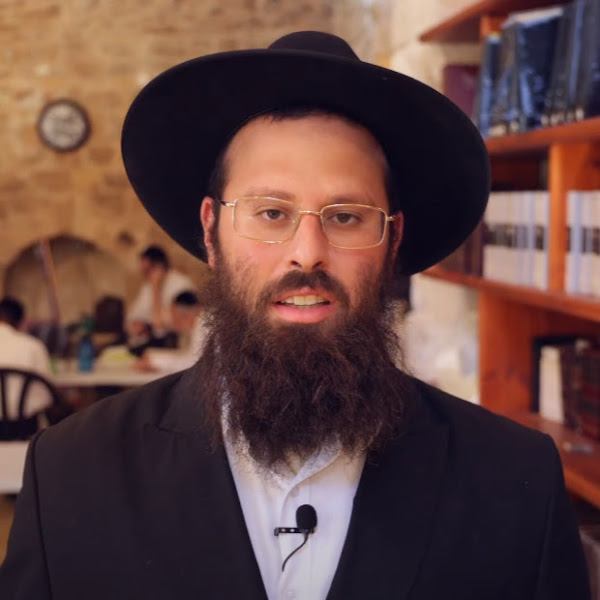
Rav of the Ohr Zarua Beis Hora'ah in the Old City of Tzfat, right off Simtat Beit Yosef. He learns Chassidus as he learns halacha, with the sources open, and he does not work alone: complex matters are brought to the senior rabbanim he learned under. He continues his own learning toward dayanus alongside the Beis Hora'ah's work.
The community
The Beis Hora'ah community on WhatsApp: two or three short pieces a week, halacha and Chassidus, written by the Rav. Many of the questions on this page are answered there over time, one piece at a time. Free, and you can leave whenever you like.
The community and the Beis Hora'ah are brought to you by the partners of the Beis Hora'ah.
No. It is a rav for hashkafa: a conversation about emunah, bitachon, tefillah, teshuva or shalom bayis from the Torah's angle, answered from Torah, Chassidus and the sources. Where a matter needs a doctor or a mental-health professional, the Rav says so plainly.
Yes. Talking to the Rav is free, like every sheilah at the Beis Hora'ah. The Beis Hora'ah is supported by its partners.
Yes. Write in your own words, a first name is enough, and nothing is stored on this site. The conversation stays between you and the Rav.
Send it in the same message. Halacha and hashkafa sit at the same desk. For business questions there is a dedicated page.
Yes. Ask on WhatsApp. Learning is one-on-one or in a small group, online; the partners of the Beis Hora'ah also have a weekly shiur.